Why
Can’t We See the Spokes
of a Quickly Turning Wheel?
When we look at an object, the image it makes on the retina, in the back of the eye , does not flash on and off instantly. It lasts for about one-sixteenth of a second. Another image coming in quickly behind the first may blend and overlap with the ealier image.
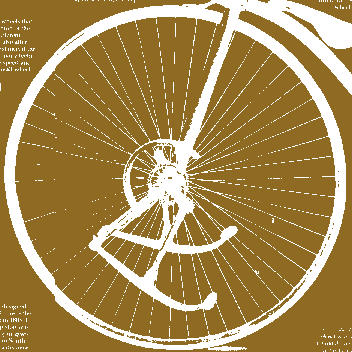
When we look at something moving quickly, such as the spokes of a quickly turning wheel, we are recieving many separate images of the wheel and its spokes as it revolves, but the images overlap so that we percieve a blur rather than distinct impressions. This is the same principle which makes the separate frames of a motion picture strip appear to be in actual motion to the viewer.
If someone were to set a spoked wheel spinning in a perfectly dark room and then flash the light on for just an instant, the wheel would appear to be standing perfectly still, with each spoke clearly visible. This is because the eye would recieve only one image of the wheel, and this image would not be blurred by any overlapping image.
This is the principle behind the strobe light which is so popular among entertainers. The strobe light is a powerful lamp which blinks on and off in a dark room while someone is performing. Because the vision of the spectator is being continuously interrunpted, there is little overlap of images which we see as motion, and the performance seems to be in slow motion.